
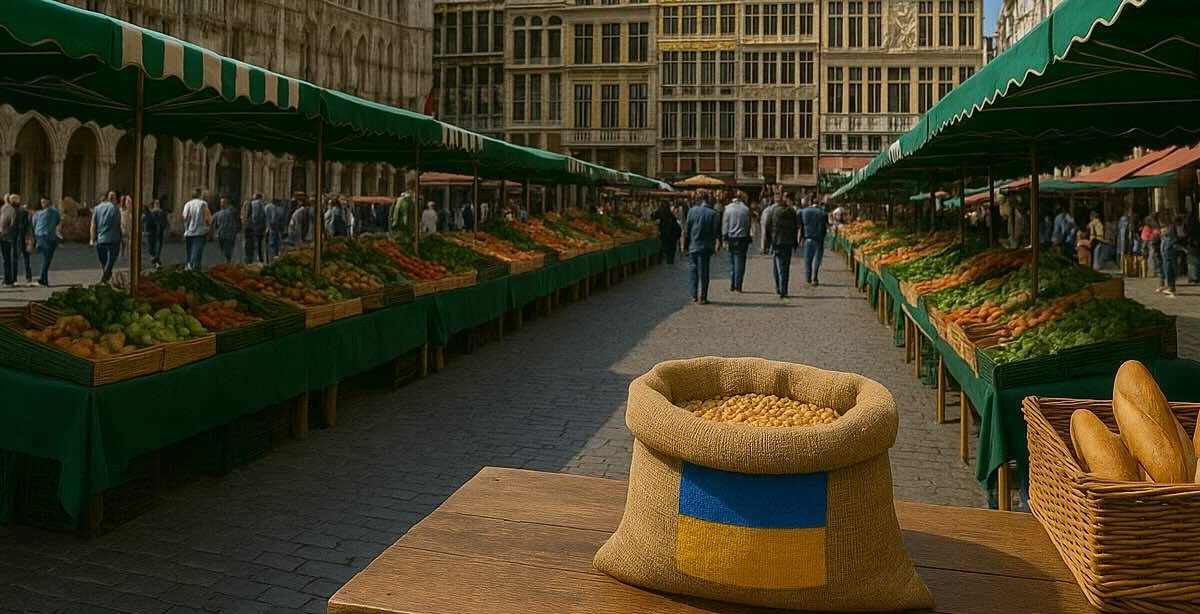

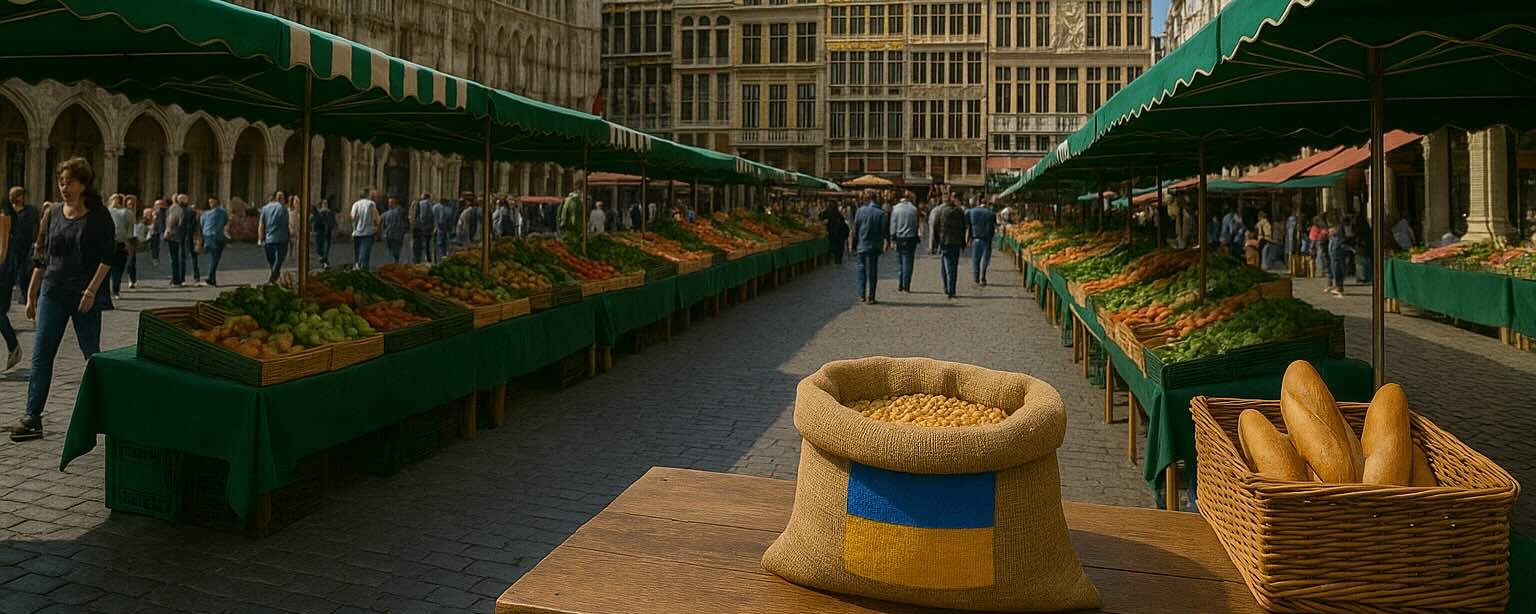
The prospect of Ukraine joining the European Union is often portrayed as mutually beneficial: Ukraine could help secure Europe’s food supply while reinforcing the EU’s standing as a global guarantor of food security. Yet, accession raises more than questions of output—it also touches on food quality, regulatory compliance, and the livelihoods of European farmers.
Agriculture is among the most demanding areas in accession negotiations, requiring strict alignment with EU norms. Ukraine currently falls short of these standards and is unlikely to reach full compliance in the near term. Still, the country’s potential is vast: more than 70% of its territory is agricultural land, with 56% arable. It leads the world in sunflower oil exports, ranks near the top for barley, maize, and wheat, and possesses one-third of the planet’s black soil. Before Russia’s invasion, farming generated 12% of Ukraine’s GDP and nearly 40% of export revenues.
The war has severely damaged the sector, both through the loss of land and destruction of infrastructure. According to EU and World Bank assessments, rebuilding will require around $56 billion (€53 billion), including $9.4 billion for immediate asset replacement and $46.7 billion over a decade to restore pre-war capacity.
Ukraine began aligning its agricultural rules with EU standards in the 2010s, but full membership would demand far-reaching reforms in food safety, water management, animal welfare, pesticide use, and environmental protection—changes that would be impossible without EU financial support.
Accession would also bind Ukraine to the EU’s Common Agricultural Policy (CAP), which consumes roughly one-third of the EU budget. Given its vast farmland—comparable to Italy—Ukraine could receive over €10 billion annually in CAP subsidies, potentially overtaking France as the largest beneficiary. Much of this support could flow to the roughly 110 large agro-holdings that dominate Ukrainian farming, many controlled by oligarchs or foreign investors.
This possibility has sparked concern across the bloc. Subsidy competition, non-compliance with EU standards, and downward pressure on prices could all disadvantage existing members. The European Commission, however, argues that many Ukrainian producers are competitive enough to thrive without subsidies and that large conglomerates might not qualify for CAP support. Critics see such assurances as unrealistic and fear that lowering EU standards to accommodate Ukraine would be counterproductive, undermining food safety and destabilizing rural economies.
For Ukraine, accession would represent a historic opportunity to modernize and secure investment. For the EU, it poses one of the most complex agricultural and budgetary challenges in its history—an endeavor that risks straining policies designed to balance fairness, quality, and sustainability across the single market.
