
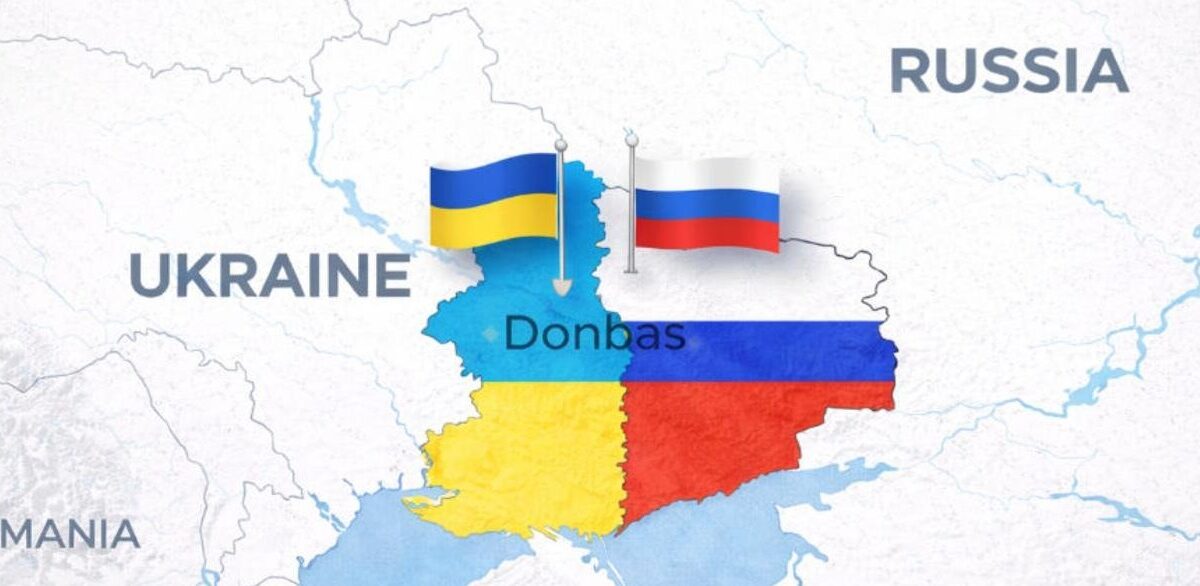

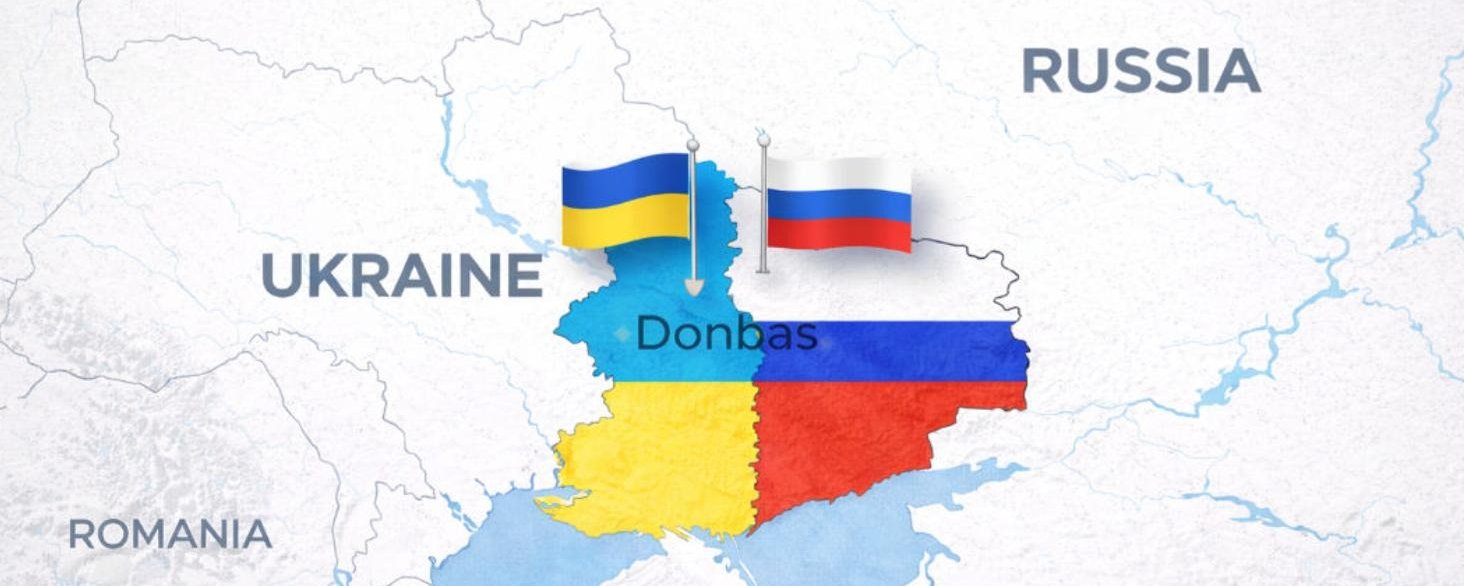
Recent statements by Russian government officials involved in the peace negotiations suggest that, contrary to prior expectations, the Kremlin is unwilling to abandon its demand regarding the full seizure of the so-called Donbas, an industrial center on the southeast of Ukraine. Moscow currently controls about 75 percent of the Donetsk region, and some 99 percent of Luhansk. The two regions form the Donbas region.
Russia has been playing an active role in these two eastern Ukrainian oblasts or regions for a long time, both militarily and politically. Since 2014, the people living in this area have been suffering from both hostile military activities and Ukrainian defence efforts. After the breakaway People’s Republic of Donetsk and the People’s Republic of Luhansk unified in 2021, thousands of Russian passports have been issued to the people living in this area which is, from Moscow’s perspective, also known as ’Novorossiya’ (New Russia). From Kyiv’s stance, this is nothing but an illegally annexed part of Donetsk and Luhansk Oblasts in Eastern Ukraine.
Bearing in mind the historical context of the term ’Novorossiya’, the Donetsk People’s Republic (DPR) and Luhansk People’s Republic (LPR) proclaimed the Confederation of Novorossiya in 2014, with the goal of extending control across southeastern Ukraine. While the formal ’Novorossiya’ political project was suspended in 2015, the region is frequently referred to as such within Russian geopolitical context. The term ’Novorossiya’ is often used to describe the pro-Russian separatist regions of Ukraine. Despite Russian President Vladimir Putin formally declared the annexation of both the Donetsk and the Luhansk regions in 2022, this act is not widely recognized.
In December 2025, Ukraine’s then military intelligence chief Kyrylo Budanov (the head of the Office of the President of Ukraine since January) said that gaining full control over the Donetsk region is one of Russia’s key military objectives for 2026. Other security experts also stressed that the Donbas will remain the key theater of hostilities and Russia’s main territorial objective.
It is no surprise that by 2026, the Donbas, Ukraine’s eastern industrial heartland has become a central issue for a peace agreement. The only surprise is that now it is Washington that is linking the issue of security guarantees to painful territorial concessions on the part of Ukraine.
The US has told Ukraine that it must sign on to a peace deal with Russia in order to get U.S. security guarantees, news agencies reported late January. This is considered a key development as U.S. security guarantees are seen by Ukraine as the linchpin for any settlement ending the war.
It should be added that, while The Financial Times reported that the Trump administration has signalled to Ukraine that U.S. security guarantees depend on Kyiv agreeing to a peace deal, likely requiring it to cede the Donbas region to Russia, German news agency Reuters, with reference to its own sources, said the US is not telling Ukraine what has to be in the peace deal and that it is misleading to suggest that Washington is trying to force Ukraine into territorial concessions to Russia.
Another interesting point is that, while German Foreign Minister Johann Wadephul criticised Russia’s stubbornness on the decisive issue of territory, he praised US efforts to bring the warring parties to the negotiating table, adding that the negotiations could still take a long time or even fail to achieve success.
At this moment, ceding the territory of Donbas seems to be fundamental in the peace process and President Zelenskyy is fully aware of it. With regard to the idea of a referendum in the Russian-occupied regions including the Donetsk and the Luhansk Regions, he said that it could be a path to acceptance, but only as part of a carefully negotiated compromise, potentially including free economic zones with mirrored Russian withdrawals.
President Zelenskyy’s slight shift in willingness to discuss the issue of the Donbas, at least in the context of a free economic zone, indicates that he is running out of room to maneuver. He expressed his concerns that figuring out the future control of the Donbas as part of the 20-point peace plan could be the most difficult point, and creating a demilitarised economic zone in the region would require further discussions on how far troops would be required to move back and where international forces would be stationed.
However, with negotiations underway on bilateral security guarantees between the US and Ukraine (not NATO), in addition, given that Kyiv wants Washington to be much more involved in Ukraine’s post-war reconstruction than anyone else, the Ukrainian president has no other choice but to accept any proposal from the United States, even if Washington wants him to cede the Donbas to Russia.
