


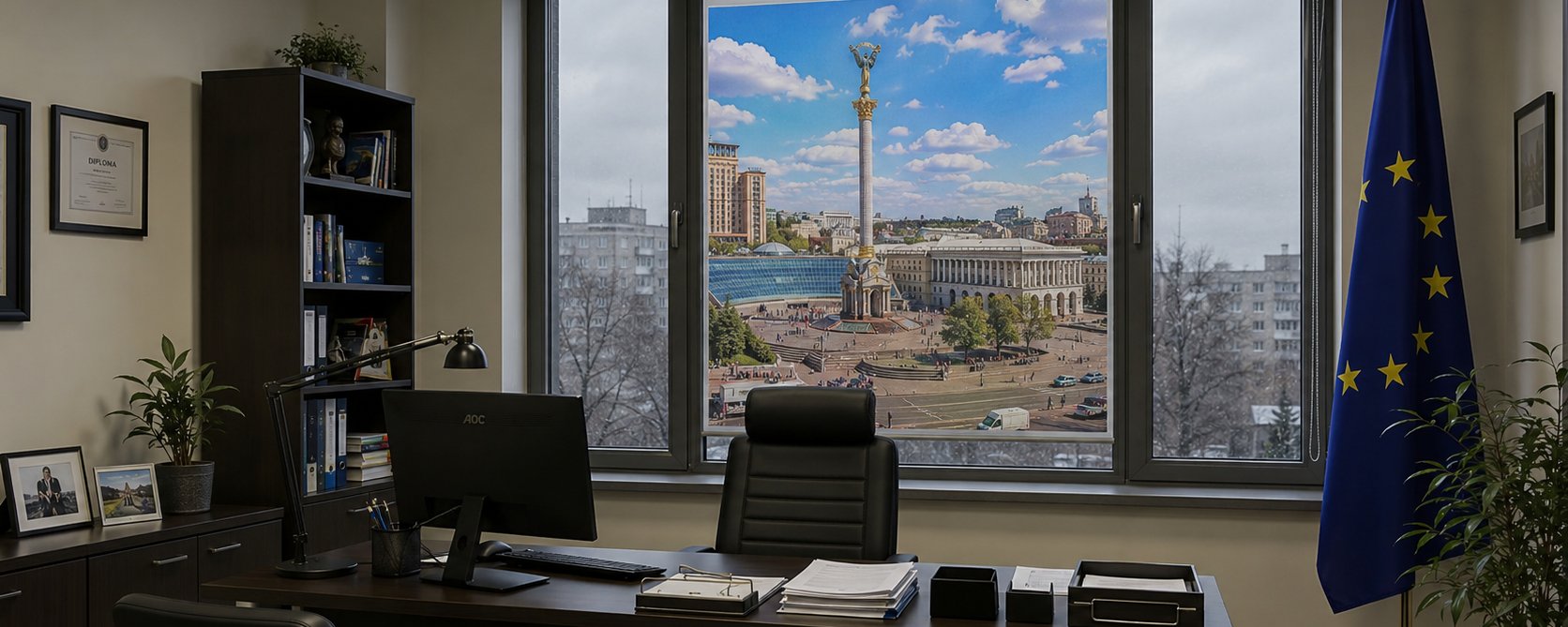
The EU supports Ukraine’s aspirations to join the European Union because Ukraine is a strategic opportunity for the EU, Council of Europe’s and European Council’s official website says adding that, Ukraine is more than a partner of the European Union. ’It is an investment in Europe’s security, stability and prosperity. Supporting Ukraine today means building a stronger, more resilient and more secure Europe for tomorrow.’, according to the Council. To back up this statement, the site’s authors list why Ukraine is considered a strategic opportunity: the country is a driver of defense innovation, is rich in natural resources, has a vibrant tech ecosystem, can enhance Europe’s energy security and has highly fertile agricultural land.
The above description – a wish list? – creates a false picture of a peaceful Ukraine where happy and satisfied Ukrainians, mostly highly skilled IT workers and defense experts, R&D engineers, qualified agriculturalists and miners, are eagerly waiting in a stand-by mode to start working for a happier future in the EU; of a country, which is capable of financing itself. As if Ukraine never had its fabulously rich oligarchs, murky political intrigues and turmoil’s and, revolting corruption scandals; more importantly, as is there was no war at all at the EU’s eastern borders resulting in a seriously damaged Ukrainian critical infrastructure and millions of refugees fleeing to European countries to avoid Russian missile attacks and, military conscription; as if Ukraine’s natural resources were fully available; and lastly, as if Ukrainians know nothing about PTSD…
In addition to a blatant disregard of the facts, another side of the same coin is, that one of Europe’s top bodies – which deliberately creates an illusion of a peaceful and prosperous Ukraine – is treating Europeans like fools, assuming they have not followed the news about the Russia-Ukraine war over the past four years. To the European Council’s abovementioned and idealized portrayal of Ukraine, the following needs to be added.
Ukraine’s tech innovations are mostly part of the defense sector. Both Ukraine’s defense industry and the country’s whole ’vibrant tech ecosystem’ as it is said on the Consilium’s website, are closely linked to Kyiv’s wartime efforts to defend itself from Russia’s aggression. These capabilities are serving war, not peace. Ukraine is mistakenly described as a world leader in defense technology given that the country’s defense infrastructure is based on western technology and Kyiv could not keep fighting without western military support, in particular, US-made Patriots.
Despite Ukraine accounts for 5% of the world’s critical raw materials and has deposits of 25 of the 34 raw materials identified by the EU as critical, a huge part of these resources is inaccessible as they are found in occupied territories.
Although Ukraine is known as a country which has around a third of the world’s most fertile land, the problem with these lands the same mentioned above – they are partly inaccessible, not to mention that Ukrainian agricultural sector has suffered huge damages due to Russian attacks. Of the 32.7 million hectares arable land, Ukraine had before the war, currently, it controls an estimated 26.5 million hectares. Another controversial issue is that standards in Ukrainian agriculture strongly differ from those in the EU, thus resulting in higher crop yield at a lower price – this is why European farmers believe they can easily go bankrupt once Ukrainian crop floods EU markets.
According to Ukraine Support Tracker by the Kiel Institute, EU institutions and Member States have committed over €165 billion in total assistance to Ukraine since the beginning of the war. Of this amount, €111.4 billion has been allocated to specific military, financial, and humanitarian purposes, with an additional €74.6 billion specifically earmarked as allocated military support. Ukraine Support Tracker – Kiel Institute
A combination of loans and budget support provided by the EU has played a crucial role in maintaining Ukraine’s economic stability, financing the country’s immediate needs and contributing to its long-term recovery and reconstruction. Without this support, Ukraine could not have survived as a state.
In light of all this, Ukraine hardly looks like a good investment in Europe’s future, at least, in the short term.
